
Passwordless Authentication for Police Departments
Secure access to CAD, RMS, and patrol car computers (MDT/MDC systems) with fast badge tap authentication — CJIS-compliant, no passwords, no delays.
Secure Access to CAD and RMS Systems for Law Enforcement
Police departments operate in high-pressure environments where seconds matter. Officers move between patrol vehicles, dispatch terminals, and shared workstations while accessing mission-critical systems like Computer-Aided Dispatch (CAD) and Records Management Systems (RMS). Credenti enables passwordless authentication for law enforcement, including patrol laptops, MDT/MDC systems, and shared police workstations, reducing login friction while maintaining CJIS and NIST compliance.
Law Enforcement Challenges
- Shared workstations and patrol laptops reduce visibility into individual officer activity
- Login delays during emergencies directly impact response time and operational efficiency
- Passwords are difficult to enter while wearing gloves or operating in high-stress conditions
- Traditional MFA methods like SMS and mobile apps are not practical in patrol environments
- Legacy CAD and RMS systems lack modern authentication capabilities
- Systems are often left logged in, increasing insider threat and compliance risks
- Limited or no connectivity in patrol vehicles requires offline authentication support
How Credenti Solved This
- Delivers passwordless authentication using badge tap or QR-based login methods
- Ensures every login is tied to a verified officer identity for full accountability
- Supports fast, no-typing authentication for use with gloves and field conditions
- Provides MFA without phones using badge + PIN or face + PIN authentication
- Extends secure access to legacy CAD and RMS systems without application changes
- Automatically locks and switches sessions to prevent credential sharing
- Supports offline authentication for patrol cars, MDT/MDC systems, and remote field environments
How Police Officers Log In Securely

Approach Patrol System
Officer approaches a patrol laptop or dispatch workstation.
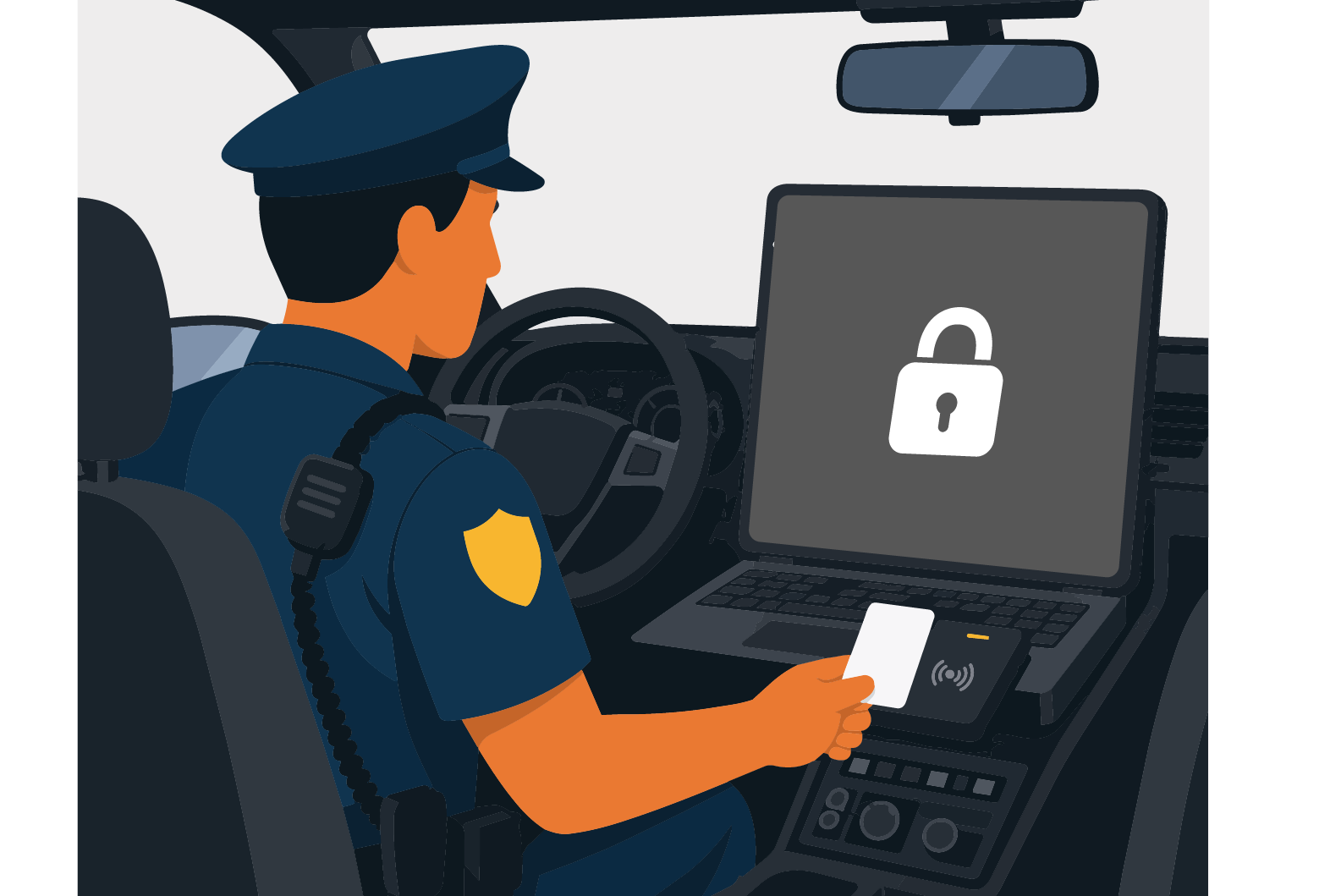
Tap Badge
Tap department-issued badge for instant identity verification.
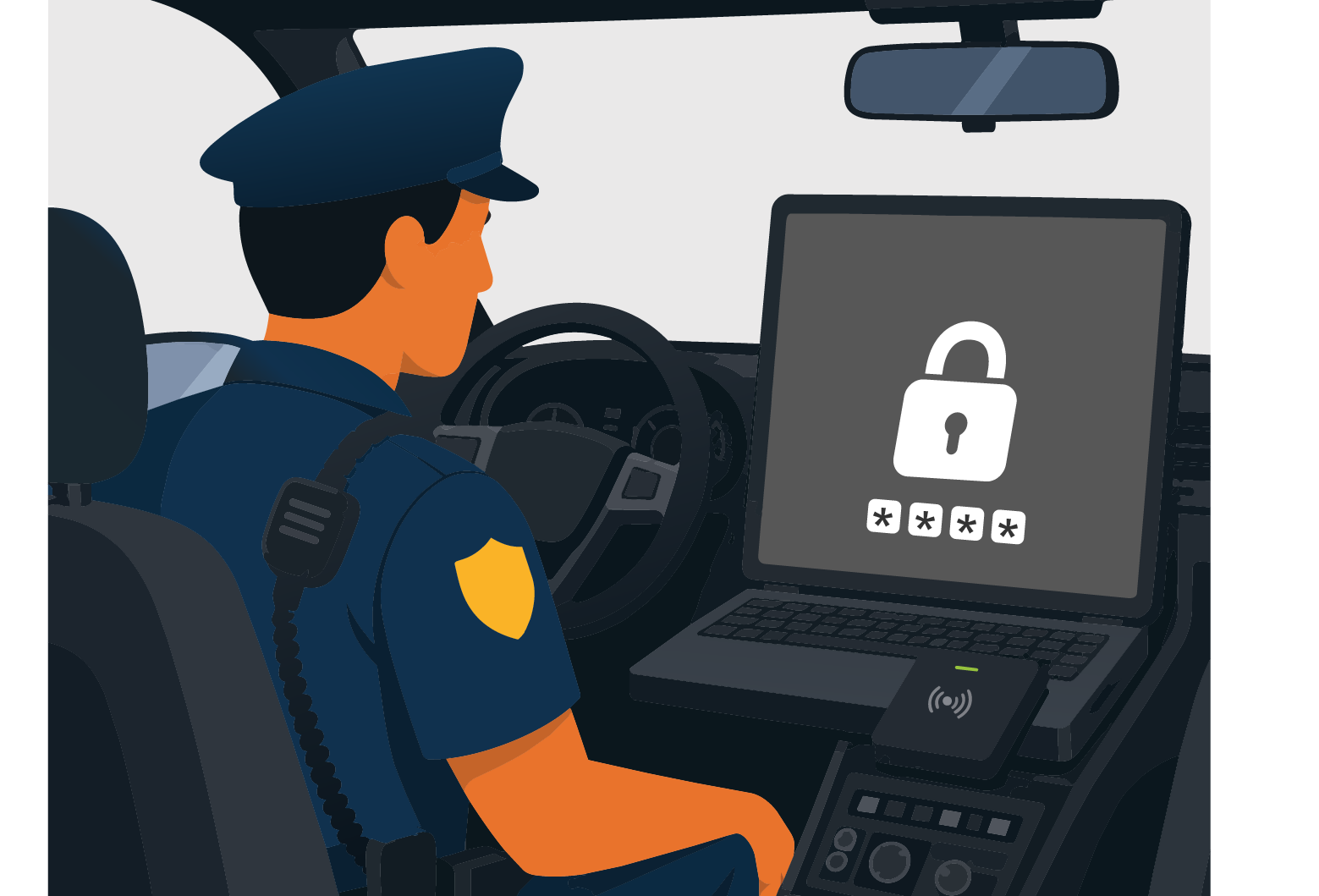
Enter PIN (Optional MFA)
Optional PIN adds multi-factor authentication for sensitive systems.
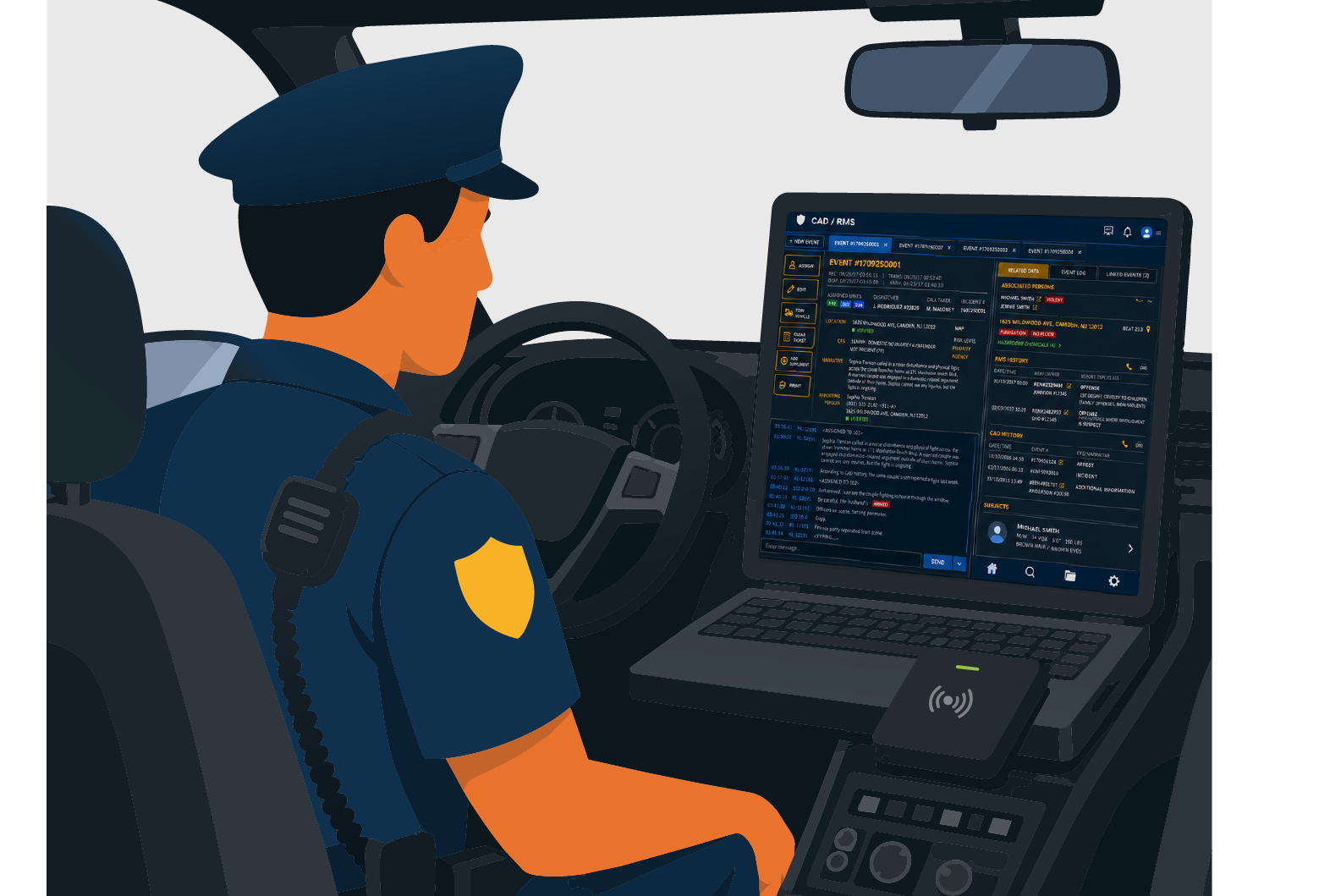
Access CAD & RMS
Immediate secure access to dispatch and records systems.
Key Capabilities for CJIS-Compliant Authentication

Badge-Based Login for Police
Enable officers to log in instantly using RFID, CAC, or PIV-I badges — no passwords required.
Fast User Switching
Enable rapid session switching between officers while maintaining secure, isolated sessions.
Secure Access to CAD & RMS Systems
Provide passwordless access to Computer-Aided Dispatch and Records Management Systems without modifying applications.
Offline Authentication for Patrol Cars
Ensure secure login even in low-connectivity environments across patrol vehicles and field operations.
CJIS Audit & Compliance Logging
Maintain full audit trails tied to individual officers to meet CJIS and NIST compliance requirements.
Legacy System Integration
Extend secure authentication into legacy law enforcement systems without modernization.
Mapping Credenti Capabilities to CJIS Requirements
CJIS 5.6.2 – Unique User Identification
Every login is tied to an individual officer using badge-based or biometric authentication, eliminating shared credentials and ensuring accountability.
CJIS 5.6.2.2 – Advanced Authentication (MFA)
Supports strong multi-factor authentication using badge + PIN or face + PIN, aligning with CJIS and NIST requirements for high-assurance authentication.
CJIS 5.5.6 – Session Lock
Automatic session locking and fast re-authentication ensure systems are never left exposed while maintaining operational speed.
CJIS 5.4 – Audit & Accountability
Detailed audit logs capture every authentication event, providing full traceability for compliance and investigations.
CJIS 5.10 – Information System Use & Protection
Enforces strong identity verification before granting access to CAD, RMS, and other CJIS systems, protecting sensitive criminal justice information.
CJIS 5.5 – Access Control in Offline Environments
Enables secure authentication even without connectivity, ensuring compliant access in patrol vehicles and remote environments.
Frequently Asked Questions
How do officers securely access CAD and RMS systems in patrol cars?
Officers can instantly access Computer-Aided Dispatch (CAD) and Records Management Systems (RMS) on rugged patrol laptops using badge tap authentication. This eliminates passwords while maintaining CJIS-compliant security.
Does this support CJIS-compliant multi-factor authentication (MFA)?
Yes. Credenti supports phishing-resistant MFA using badge + PIN or face + PIN, aligning with CJIS Security Policy and NIST guidelines for strong authentication.
Can police officers log in without internet connectivity?
Yes. Offline authentication allows officers to securely access patrol car systems and CJIS applications even in low or no connectivity environments.
What badges and card readers are supported?
Credenti supports RFID, CAC, PIV, and PIV-I badges along with standard readers like HID Omnikey and rfIDEAS. Built-in readers on rugged patrol laptops are also supported with compatible cards. See supported cards and readers for details.
Does this work with existing CAD, RMS, and other CJIS applications?
Yes. Credenti integrates with legacy CAD, RMS, and other CJIS systems without requiring changes, enabling secure, passwordless access across existing law enforcement infrastructure.
Can Credenti integrate with Okta, Microsoft Entra, or Active Directory?
Yes. Credenti integrates with Okta, Microsoft Entra, CyberArk, and Active Directory, supporting domain-joined, non-domain joined, and hybrid environments.
CJIS-Compliant Access for Modern Police Departments
Deliver secure, passwordless authentication for CAD, RMS, and patrol systems — improving response time, accountability, and compliance.


