
CJIS Compliance for Shared Workstations: Identity, Audit, and Accountability Without Disruption
Law enforcement, public safety, dispatch, and corrections environments rely heavily on shared workstations, kiosk systems, and always-on terminals to maintain operational speed and continuity. However, the CJIS Security Policy requires strict enforcement of unique user identification, authentication, audit logging, and accountability—creating a challenge for organizations using shared logon models.
This white paper explores how agencies can preserve these workflows while still meeting CJIS requirements.
This white paper outlines:
- How to meet CJIS requirements for unique user identification (5.5.1) in shared environments
- How to enforce authentication and MFA (5.6.2, 5.6.2.2) without disrupting operations
- How to achieve audit logging and accountability (5.4) on shared workstations
- How badge-based, biometric, and passwordless authentication restores user-level traceability
- A real-world example of badge tap authentication with detailed audit logging
- How to secure dispatch, booking, and patrol systems without changing existing workflows
It addresses the core challenge faced by CJIS-regulated organizations: maintaining fast, uninterrupted access to critical systems while ensuring every action is attributable to a verified individual for audit readiness, compliance, and incident response.
Download the white paper to learn how to implement passwordless, auditable access for shared workstations while aligning with CJIS Security Policy requirements—without slowing down public safety operations.
Download Whitepaper
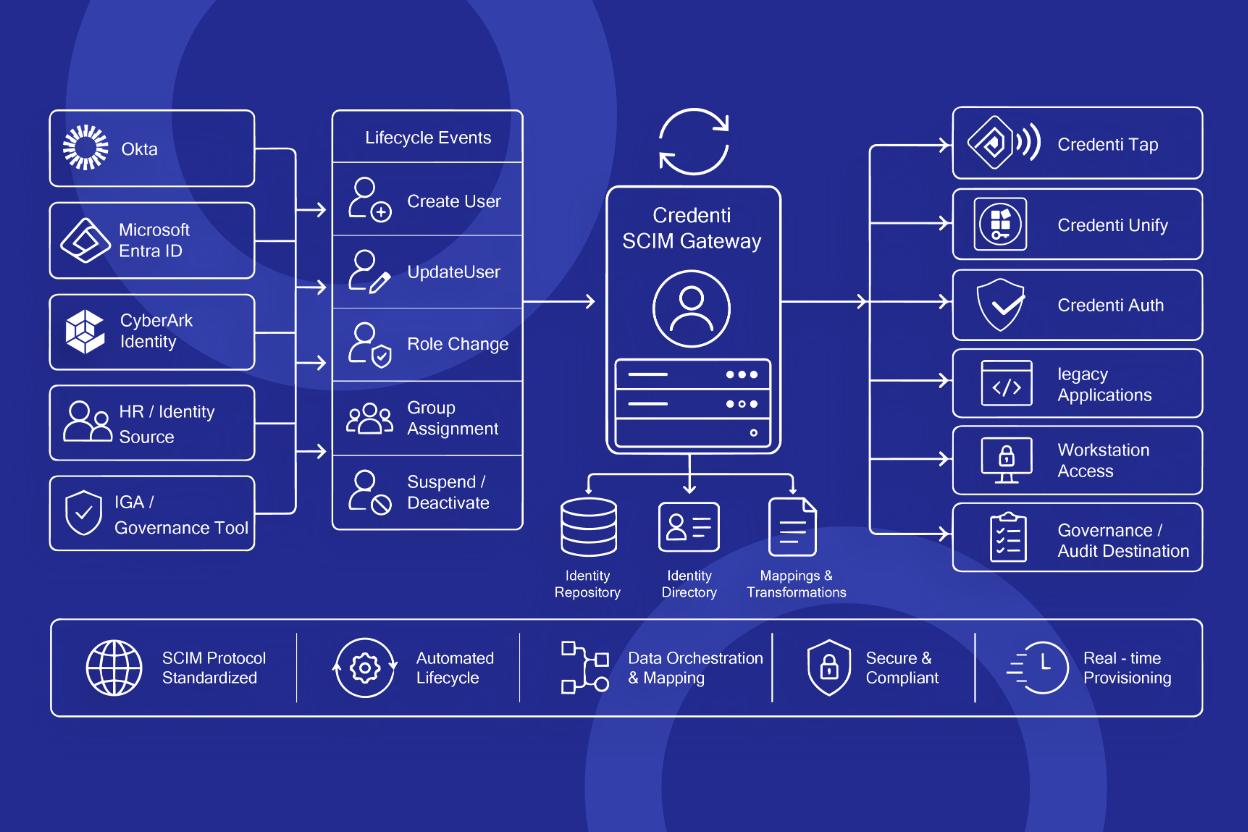

Make Shared Workstations CJIS-Ready
Credenti helps CJIS-regulated organizations add individual identity, passwordless authentication, auditability, and accountability to shared workstations, dispatch terminals, booking stations, and legacy application environments.


